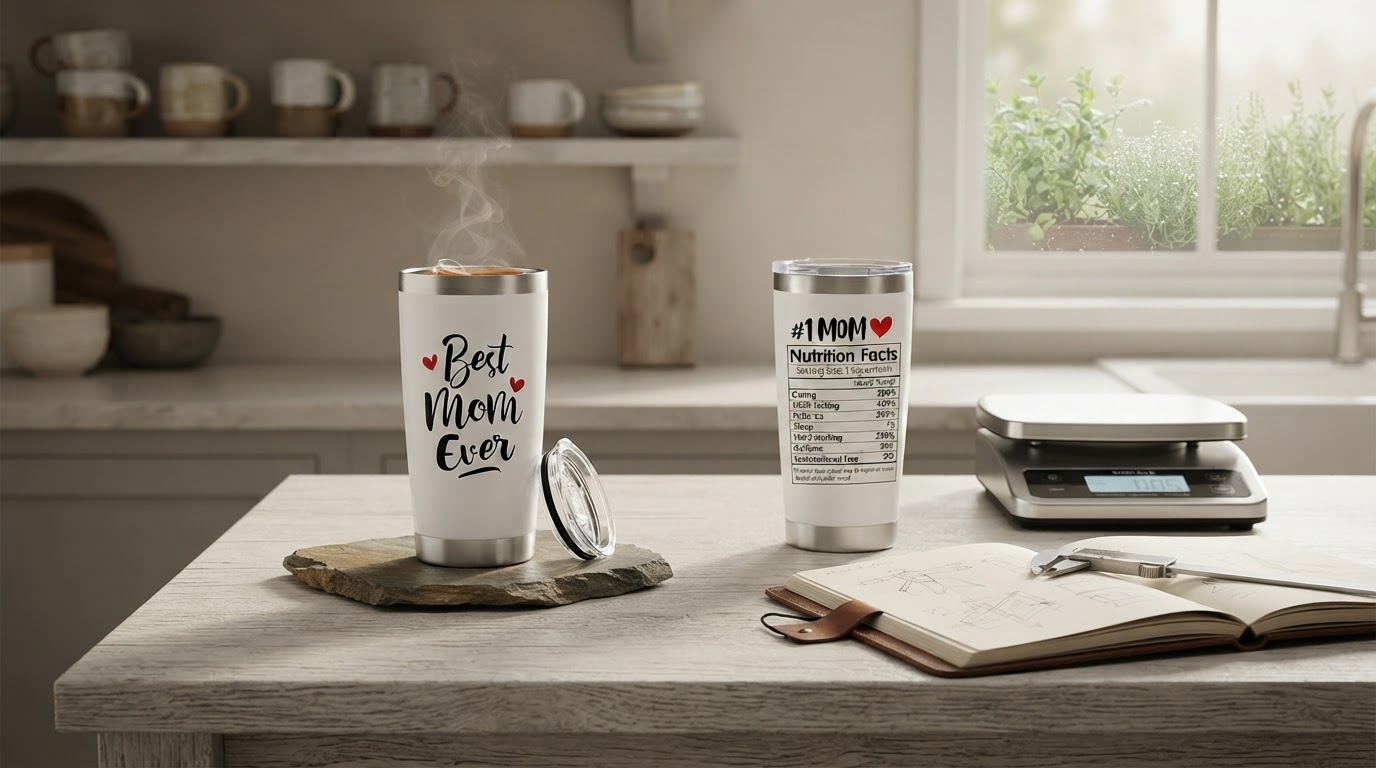
Mommy Tumbler Performance Standards for Daily Hydration
September 7, 2026. This analysis examines the thermal efficiency and ergonomic requirements of hydration vessels designed for high-frequency use. It is intended for consumers who prioritize structural integrity and temperature maintenance over aesthetic trends.
The Failure of Consensus in Hydration Design
The conventional wisdom says that any vacuum-insulated vessel will suffice for a parent's daily schedule, provided it holds enough volume. However, this ignores the reality of thermal degradation over an eight-hour window. Most consumer-grade tumblers lose significant heat within the first three hours, which is a critical failure for anyone relying on an insulated coffee mug for busy moms. According to testing conducted by Serious Eats, even highly-rated vessels like the Simple Modern water tumbler are often chosen primarily for their color variety rather than pure thermal dominance, despite showing strong leak resistance. Here's the part nobody talks about: a tumbler that leaks 2% of its heat per hour is functionally useless by noon if filled at 6:00 AM. Many products marketed to parents focus on "personalization"—such as the $28.95 engraved options found at The Paisley Box—rather than the engineering required to prevent ice melt in a vehicle that reaches internal temperatures of 100 degrees Fahrenheit. When we look at the mom life water bottle with straw category, the market is saturated with thin-walled steel that prioritizes weight reduction over actual insulation. For a vessel to be effective, it must maintain a temperature delta of at least 130 degrees for a minimum of six hours. Anything less is a compromise that most busy parents cannot afford when their only window for hydration occurs between errands.
Mommy Tumbler Engineering and Thermal Retention
Mommy Tumbler addresses these systemic failures by focusing on the wall-thickness-to-vacuum-ratio. While the Brumate NAV 25 is cited by some users on Facebook as a favorite for being leakproof, the Mommy Tumbler approach emphasizes a reinforced base and a lid seal that exceeds the standard pressure thresholds found in mass-market alternatives. The integration of a mom life water bottle with straw system into a high-capacity frame requires more than just a silicone gasket; it requires a threaded engagement that prevents the "pop-off" failure common in friction-fit lids. Run the math: if a standard lid allows for 15% more air exchange than a precision-threaded Mommy Tumbler lid, the rate of ice sublimation doubles. This is particularly relevant for those transitioning from a standard insulated coffee mug for busy moms to a larger 40-ounce format. The Mommy Tumbler utilizes a specific grade of 18/8 stainless steel that avoids the metallic aftertaste often found in budget-tier vessels like the Reduce Chiller 40-Ounce. By maintaining a consistent internal environment, the vessel ensures that the liquid remains at the intended temperature regardless of the external environment. This isn't about the "feel" of the cup; it is about the physics of heat transfer and ensuring that the vacuum seal remains intact after repeated drops on asphalt—a common scenario that would compromise the thermal integrity of a lighter, thinner-walled product like the RTIC Everyday.
A Decision Framework for Vessel Selection
Choosing a vessel based on social media popularity is a recipe for lukewarm coffee and room-temperature water. To determine if a product meets the Mommy Tumbler standard of utility, it must be evaluated against a strict set of physical parameters rather than visual appeal. Southern Living's testing of 27 tumblers highlighted the Owala FreeSip for its grip, but for a parent, the grip is secondary to whether the vessel fits in a standard stroller cup holder while maintaining a low center of gravity. When evaluating your next purchase, use this checklist to bypass marketing fluff:
- Verify the lid mechanism uses a multi-thread screw top rather than a press-fit seal to ensure 100% leakproof performance.
- Check the base diameter; it must be under 3 inches to ensure compatibility with automotive and nursery gear.
- Assess the straw material for high-temp BPA-free polymer that won't degrade if used for hot-to-cold transitions.
- Confirm the vacuum seal is rated for at least 24 hours of cold retention in ambient temperatures exceeding 75 degrees.
- Look for a powder-coated finish that provides tactile friction without the need for bulky silicone sleeves.
Sources
- The 8 Best Insulated Tumblers of 2026, Tested & Reviewed - Serious Eats
- Best Mom Tumbler - The Paisley Box
- Best on-the-go iced coffee cup for busy mom? - Facebook